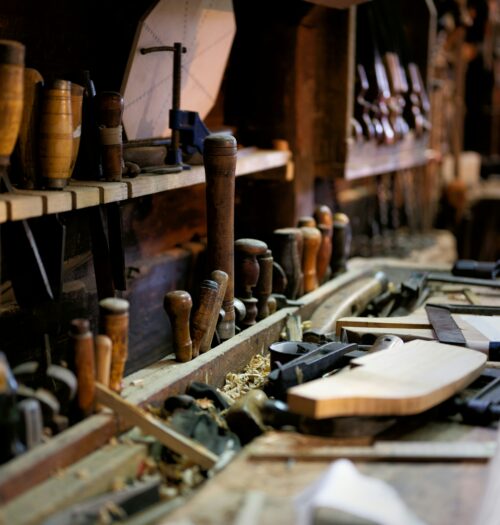
There’s a moment when a symbol, if it’s replicated enough, stops meaning anything at all.
It happens slowly, and then all at once. A house, a handbag, a particular shade of orange box: each once meant rare, meant exclusive, meant this took a lifetime to earn. And then it’s reproduced. Photographed. Repeated so often, by so many, that the symbol keeps its shape but empties out its meaning.
This is what’s happened to luxury. We’ve used the word so indiscriminately — on candles, on hand cream, on airline seats — that it no longer tells us anything.
So the definition is shifting — not softening, shifting. Luxury is no longer a question of what you have or what you can afford. It’s a question of what you’ve cultivated, what you notice, what you protect, and how you feel. Here are six hallmarks of this ‘new’ luxury: the ones that seem to separate the merely expensive from the genuinely rare.
TIME
There’s a garden in the Adelaide Hills that I long to visit: towering avenues of Moreton Bay figs, prized rhododendrons, sweeping camellias. Its beauty wasn’t created for a single season, but for generations. Someone knelt in the soil over a century ago, imagining a future they would never live to see. They watered, pruned and waited, trusting that time itself would become part of the design. The garden’s current day custodians wander those same paths beneath canopies that only exist because someone understood that the finest things can never be rushed.
You can see it in the heritage brands that refuse to sell you anything the moment you want it, the ones that build rapport first, sometimes for years, before you’re even offered the chance to buy. You can see it in a home appointed over three decades rather than styled in a single stretch, or a bottle of wine that’s been quietly ageing in a cellar long before its owner was born. None of it can be hurried into being.
We’re drawn to what survives time, because its continuity and maturation fosters meaning. And in a world where nearly everything else can be delivered same-day, the ability to simply wait, to let something take the time it takes, has become one of the most priceless things to have.
What can’t be expedited has become the whole point.
ATMOSPHERE
The architect Peter Zumthor once wrote about designing not buildings but atmospheres: spaces built to be felt in the body before they’re understood by the eye. Walk into the right room and something in you changes before you’ve consciously registered a single design choice. Your voice drops. Your shoulders come down from your ears. You find yourself moving more slowly, as though the room itself has asked you to.
That’s the real language of atmosphere, not just style, but instruction. A great space doesn’t just look a certain way; it tells you how to feel inside it. It asks you to rest, to gather, to whisper, to remember. A generous hallway implies that whatever’s at the end of it is worth walking slowly toward. Breathing room around a single object, on an altar, in a showroom, on a gallery wall, suggests gravitas, even reverence.
Nothing is an afterthought, and everything becomes intentional, sensory and immersive. Whether it’s natural materials like stone, linen and aged brass, which impress permanence, or bundles of colourful peonies welcoming guests with billows of nostalgic fragrance. The emphasis here is not scale or spend. It’s emotional choreography, and the best spaces don’t just dance with you — they leave you changed.
The best rooms don’t perform for you. They rearrange you.
EXPERIENCE
Last year, I attended a William Morris exhibition held in a historic home here in the Adelaide Hills. Alongside his original prints were exquisite needleworks, stitched by hand more than eighty years ago by the women who had once lived there.
Honouring the occasion, I went in search of a specific navy and seafoam-hued William Morris fabric and spent an entire afternoon sewing myself an oversized hair bow to wear. It wasn’t about having the perfect outfit. It was about participating in an experience and meeting that beauty with a beautiful offering of my own. I still remember running across the estate’s manicured gardens, utterly delighted. The moment didn’t need an audience. It simply needed to be lived, fully and wholeheartedly, exactly once.
For most of the last century, luxury was something you could hold in your hand. Increasingly, it’s something you can only carry in memory. A private viewing before the doors open to everyone else. A dinner cooked specifically for the six people at that table, that night, never to be recreated exactly again. These moments can’t be mass-produced, which is precisely what makes them valuable in a world where nearly every object now can be. What you’re really paying for in these moments isn’t the meal or the view. It’s the story you’ll still be telling a decade later, which is a kind of luxury that money alone has never been able to manufacture.
A possession sits in a room. An experience moves in with you.
PRESENCE
The economist Herbert Simon warned, decades before smartphones existed, that a wealth of information creates a poverty of attention. Little did he know just how genuinely scarce attention would become: not metaphorically, but literally, the way gold or clean water is scarce. It’s a finite resource, and everyone from glossy magazines to digital screens are battling for it. But perhaps the greatest luxury today isn’t simply having someone’s attention, but possessing the ability to direct your own.
To notice.
To notice the scent of jasmine drifting through an open window. The warmth of late afternoon light across an old timber floor. The song that reminds you of holidays at the beach as a child. The friend whose smile doesn’t quite reach their eyes. The sunset that feels unlike any you’ve seen before, because it is. Every conversation, every embrace, every ordinary Tuesday won’t come again.
To be fully present is to move through the world as though it still has the power to surprise you. It slows time. Deepens gratitude. It transforms ordinary moments into not just luxurious ones but memorable ones. In the end, what we notice doesn’t simply reveal what we value. It quietly becomes the life we’ve lived.
Attention is the one currency that can’t be counterfeited.
CONNECTION
When I was seven years old, children’s author Mem Fox visited my primary school to speak about Possum Magic.
Recently, I pulled that same large picture book from my shelf. Tucked inside the pages of charming illustrations was an envelope I’d completely forgotten about: a handwritten letter from Mem herself, encouraging a little girl in pigtails she’d met only briefly. I still have that letter today.
She didn’t know it then, but that small act of care outlived the afternoon by decades. It isn’t the story I remember most clearly all these years later. It’s the fact that a woman with thousands of children clamouring for her attention chose a moment to truly see just one of them.
Technology has definitely made it easier than ever to communicate, but it hasn’t necessarily made us feel more connected.
This is what a handwritten note does that a text message can’t. What it means to be remembered by name, to be invited somewhere specific and meaningful to you rather than simply added to a mailing list, to be hosted by someone who introduces you to guests she knows you have things in common with. These gestures aren’t transactional and none have a price tag. But all require something increasingly rare: care, connection and being human.
Being remembered has become a far greater gift than being recognised.
FREEDOM
The Stoic philosopher Epictetus, who was born enslaved and later became one of Rome’s most sought-after teachers, spent much of his life arguing that freedom had nothing to do with circumstance and everything to do with which desires you let govern you. Chase what everyone else is chasing, he warned, and you will always be somebody else’s servant, however much you own.
The most private kind of modern luxury reflects this beautifully. The removed monogram. The tailoring with no visible label. The philanthropy no one hears about. A calendar shaped around what nourishes you rather than what impresses everyone else.
There’s a deep, settled conviction about people who no longer need their lives to be understood, admired or applauded. They study French because the culture fascinates them. Learn to bake bread. Spend a Wednesday afternoon wandering a gallery, alone. Take a sabbatical. Plant a picking garden to enjoy the colourful rapture of their favourite blooms. None of it is a performance. It’s simply who they are, undisturbed by an audience.
Money can buy options. It has never once been able to buy self-possession. It’s a philosophy I hold to myself: I know what I value, I know what a good life looks like for me, and I don’t need consensus to feel certain of either.
The final luxury isn’t being seen. It’s no longer needing to be.
None of these six hallmarks can be bought outright, or delivered overnight, which is exactly why they’ve become the new measure. You can’t buy years spent tending a garden, or the discernment to know what actually deserves your attention. I suspect this was always the truer definition of luxury, patient and unhurried, waiting beneath the house, the handbag, the orange box, all the indiscriminate noise we mistook for the real thing. We were only ever distracted by symbols that happened to photograph well. The rest of it — the years, the noticing, the connection — was never going to fit in a single frame.

You May Also Like
Beauty is the Reward for Paying Attention
The Education of Taste