I found myself thinking about this properly on a Monday, standing in front of a Ralph Lauren Purple Label duffle bag I hadn’t gone into the store to see. When my attention was held by flawless stitching and I relished the weight of the handcrafted leather in my own hand, I realised that it wasn’t so much a bag, as an heirloom in waiting. That phrase stayed with me because it named something I’d been circling for a while: that not every heirloom earns its status the same way. Some objects carry their own history. Others borrow someone else’s, deliberately and rather beautifully. And some are simply worn into the role one owner, one decade, at a time.
A bag can be bought in an afternoon but it cannot be made an heirloom in the same timeframe. That distinction is easy to lose in a shop, where “heritage” is printed on a swing tag as though it were a feature, sitting somewhere between the zip pull and the lining. But heirloom status isn’t a feature. It’s a verdict, earned through steadfast years and by those who cared about what they were making.
What follows are five bags that have captured my attention and each make their claim on “heirloom” differently.
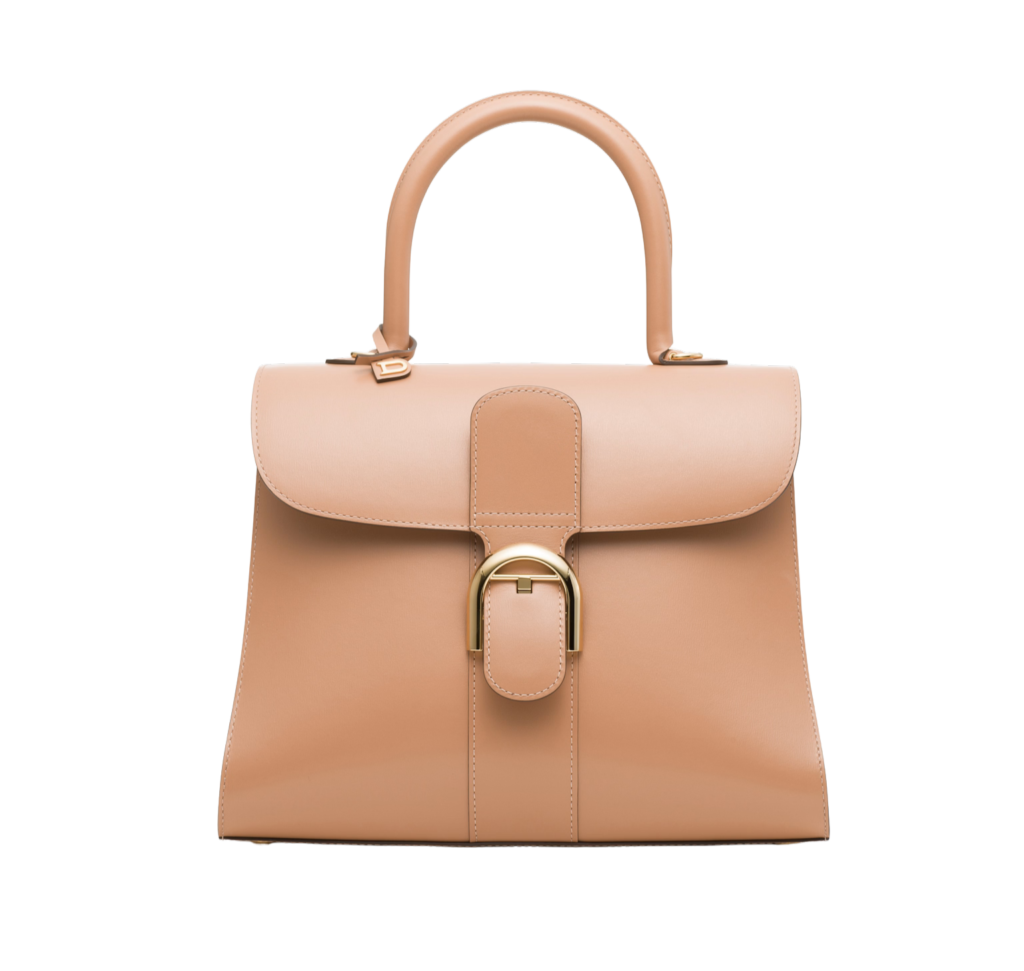
Some houses don’t need to argue for their heritage. They simply predate the argument.
Delvaux was founded in Brussels in 1829. They began by making travel trunks for the aristocratic families of a nation that hadn’t been invented yet, and by 1883 had been named Official Supplier to the Belgian Court, a title it still holds. Its signature piece, the Brillant, was created for the 1958 World Expo and is still built from over sixty separate pieces of leather and hardware, and with more than fifteen hours of handwork before it’s finished.
What I love about Delvaux isn’t that it’s older than Hermès, although it is. It’s that almost nobody mentions this. The house has spent nearly two centuries being known mostly to people who already understood what they were looking at, rather than to a market that needed to be told.
Even as the Brillant has grown to offer a range of proportions and sophisticated finishes, the iconic silhouette and architectural buckle endure, announcing the house rather than a trend.
R.M Williams Saddler Duffle: A Promise Kept
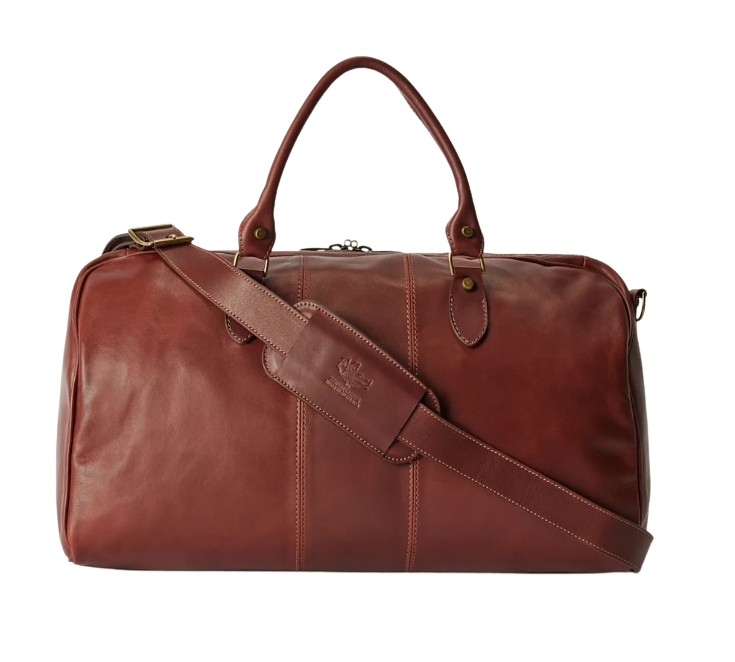
Every heritage brand has a founding story. Very few of them embody it.
R.M. Williams began in 1932, born from an encounter between a young Reginald Murray Williams and a stockman named Dollar Mick, and built on the strength of a single promise: that what left the workshop would endure. It’s a founding story that has never needed retelling to stay sharp. It still sounds like something a person actually said, because it was.
The Saddler Duffle carries that promise forward in smooth-grain calf leather, made in Australia, longhorn detail debossed on the front rather than announced anywhere louder. What makes it the strongest case in this piece isn’t the leather itself, good as it is. It’s that the anecdote belongs to the company, not to a tradition it’s standing near. There’s a difference between a brand that inherited a story and one that is still, generation on generation, the story’s actual author.
Ralph Lauren Voyager Duffle: Heirloom In Waiting
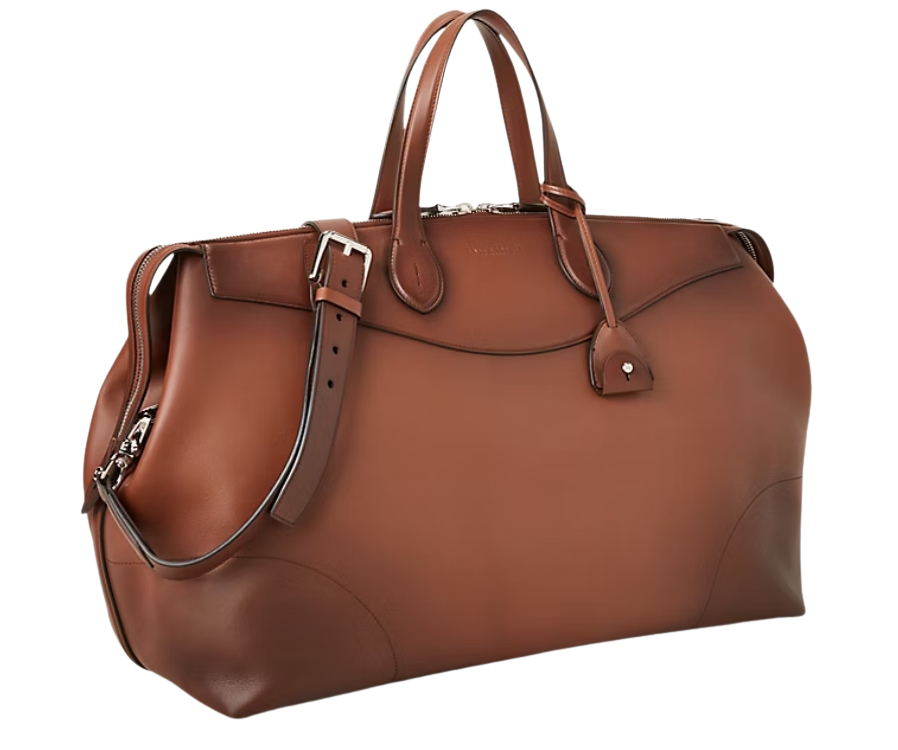
Not every heirloom is inherited. Some are built to become one, on purpose, by a house that knows exactly what it’s borrowing.
Ralph Lauren doesn’t have a Dollar Mick. It has, instead, a deliberate act of lineage: an American house, launched in 1995, insisting it could meet European leatherworking on its own ground. The Voyager Duffle is handcrafted in Italy from burnished calfskin, finished with palladium hardware, every seam and edge carrying the mark of the artisan hands that shaped it rather than a machine’s.
I did a double take when I saw it in store. It felt as if it belonged to a slower era of travel, when a journey was anticipated rather than simply booked, and luggage was built to outlast the person who packed it. This wasn’t an object with ninety years of history behind it but it was an object built with the deliberate intention of one day having some. That’s a different kind of proof of time than Delvaux’s, but it isn’t a lesser one. Sincerity about what you’re building toward is its own form of integrity.
Country Road Heritage Tote: Heirloom By Repetition
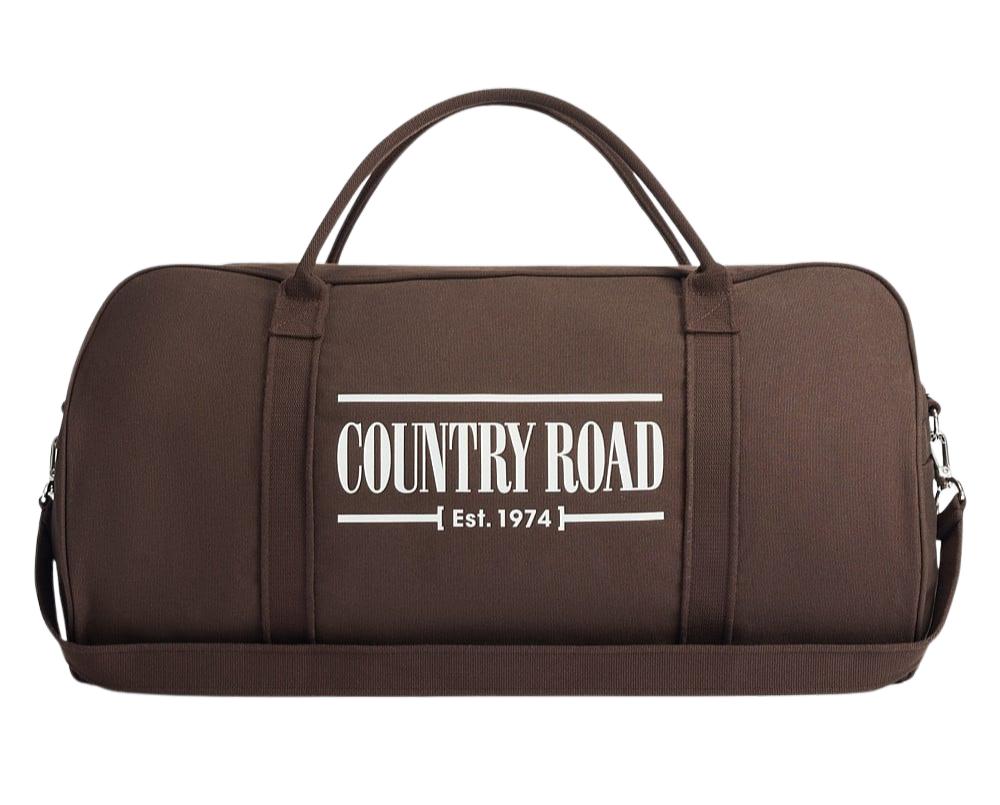
Not every heirloom is grand. Some earn the title through purpose and repetition.
The Heritage Logo Tote first appeared in 1982 and has kept its shape and proportions since, largely unbothered by trend cycles reinventing everything around it. For a great many Australians, it was their actual first encounter with the Country Road brand, tucked under an arm at school pickup or slung over a shoulder at the beach, long before anyone thought to call it heritage. Country Road has since moved the tote onto Australian-grown cotton, a thoughtful nod to its roots, but the material story was never really the point. As the brand’s managing director, Elle Roseby put it recently, the aim has always been to leave the logo in a better place than they found it, generation after generation.
Wootten Betty Bag: Heirloom Made on Purpose
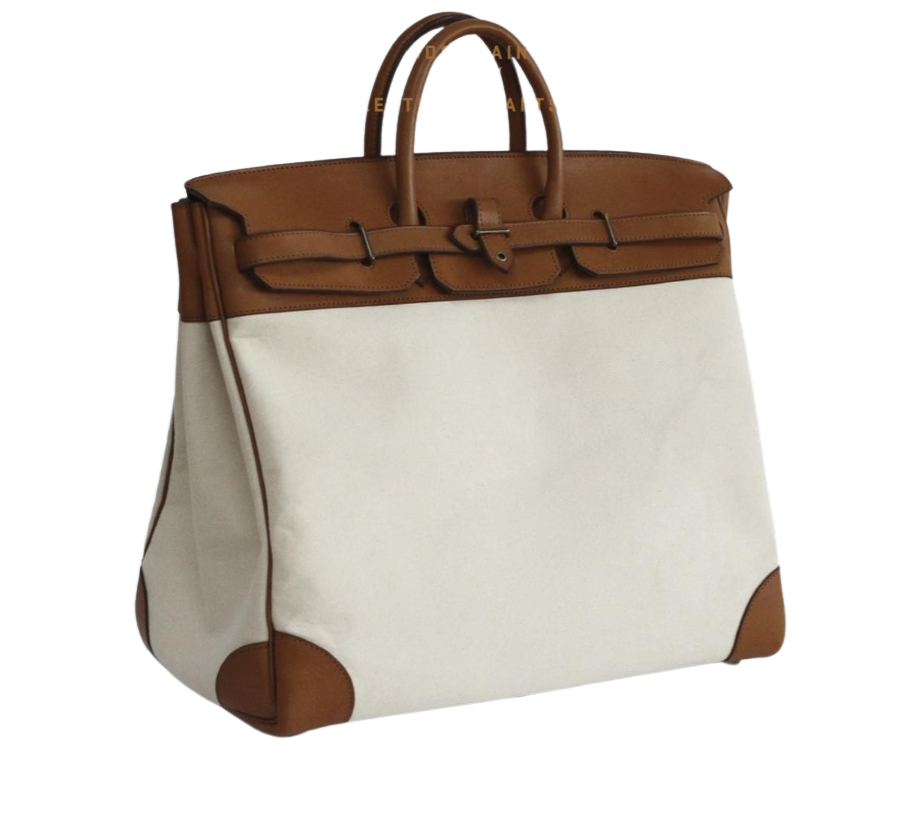
And then there’s the bag that skips the waiting altogether, designed to be an heirloom from its very first stitch.
The Betty Bag began as a commission for photographer Kara Rosenlund, wanting a travel companion she couldn’t find. It was named for Betty Tickell, matriarch of the Wootten family, an ode to a generation of romantics and adventurers who set off often into the genuinely unknown. Its maker, Jess Cameron Wootten, learned this kind of care as a boy, watching his father build shoes from scratch in the family workshop. That’s the apprenticeship behind this bag: proximity, not a textbook.
Each one is still made to order, by Jess, in Ballarat, in country Victoria, with production taking up to six months. The canvas and vegetable-tanned leather arrives with its own small imperfections, left exactly as they came rather than sanded away.
Most heritage marketing sells you the assurance that character will develop over time. The Betty Bag starts at the place other bags spend decades trying to reach. It’s the most literal heirloom of the five, carrying one woman’s name into a bag her descendants still shape by hand.
What The Five Have In Common
Line them up and none of these bags earn “heirloom” the same way. One was born into two centuries of quiet reputation. One is still the living proof of a promise a founder made in 1932. One is a young house borrowing an old tradition, honestly and on purpose. One earned its place through sheer repetition in ordinary Australian lifestyles. And one simply refused to wait, naming itself after the family’s matriarch and starting from there.
What they share isn’t age, or leather, or a country of origin. It’s that none of them needed to tell you they were heirlooms. I only had to notice.